La vida silvestre del complejo Ixodes affinis (Acari: Ixodidae) y su adaptación a las áreas rurales de México
DOI:
https://doi.org/10.19137/cienvet.v27.8319Palabras clave:
Complejo Ixodes affinis, Garrapata Silvestre, Perro, MéxicoResumen
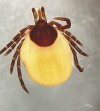
Ixodes affinis es una garrapata que pertenece a un grupo que incluye cuatro especies, el cual se encuentra distribuido desde el norte de Argentina hasta Canadá. En México se ha reportado una especie, Ixodes keiransi, en seis Estados de la república, alimentándose de mamíferos y aves, principalmente de hábitos silvestres. Esta especie de garrapata ha sido incriminada como potencial vector entre animales silvestres y domésticos, de Borrelia burgdorferi, la bacteria causante de la enfermedad de Lyme. A pesar de haber sido hallada principalmente en animales silvestres, puede parasitar animales domésticos como los perros cuando son llevados a la selva o bosque para realizar actividades de cacería o de recreo. En este documento se presenta la descripción morfológica de la garrapata, hospedadores, ciclo de vida, ecología, distribución y adaptación que está teniendo esta especie silvestre a las áreas rurales de México.
Referencias
Nava S, Beati L, Venzal JM, Durden LA, Bermudez SE, Tarragona EL, Mangold AJ, Gleason D, Mastropaolo M, Guglielmone AA. Description of two new species in the Ixodes ricinus complex from the New World (Acari: Ixodidae), and redescription of Ixodes affinis Neumann, 1899. Zootaxa. 2023; 5361(1): 053–073.
Guzmán-Cornejo C, Robbins RG. The genus Ixodes (Acari: Ixodidae) in Mexico: adult identification keys, diagnoses, hosts, and distribution. Rev. Mex. de Biodivers. 2010; 81:289–298.
Saracho-Bottero MN, Venzal JM, Tarragona EL, Thompson CS, Mangold AJ, Beati L, Guglielmone AA, Nava S. The Ixodes ricinus complex (Acari: Ixodidae) in the Southern Cone of America: Ixodes pararicinus, Ixodes aragaoi, and Ixodes sp. cf. I. affinis. Parasitol Res. 2010; 119:43-54.
Rodríguez-Vivas RI, Ojeda-Chi MM, Thompson AT, Yabsley MJ, Colunga-Salas P, Sánchez-Montes S. Population genetics of the Ixodes affinis (Ixodida: Ixodidae) complex in America: new findings and a host-parasite review. Parasitol Res. 2024; 123:78.
Rodríguez-Vivas RI, Apanaskevich DA, Ojeda-Chi MM, Trinidad-Martínez I, Reyes-Novelo E, Esteve-Gassent MD, Pérez de León AA. Ticks collected from humans, domestic animals, and wildlife in Yucatan, Mexico. Vet Parasitol. 2016; 215:106–113.
Harrison BA, Rayburn WH, Toliver M, Powell EE, Engber BR, Durden LA, Robbins RG, Prendergast BF, Whitt PB. Recent discovery of widespread Ixodes affinis (Acari: Ixodidae) distribution in North Carolina with implications for Lyme disease studies. J Vector Ecol. 2010; 35:174–79.
Solís-Hernández A, Rodríguez-Vivas RI, Esteve-Gassent MD, Villegas-Pérez SL. Detection de Borrelia burgdorferi sensu lato in dogs and its ticks in rural communities of Yucatán, Mexico. Rev Biol Trop. 2018; 66(1):428-437.
Scott JD, Clark KL, Foley JE, Durden LA, Manord JM, Smith ML. First record of Ixodes affinis Tick (Acari: Ixodidae) infected with Borrelia burgdorferi sensu lato collected from a migratory songbird in Canada. J Bacteriol Parasitol. 2016; 7:281.
Nadolnya RM, Gaffa HD. Natural history of Ixodes affinis in Virginia. Ticks Tick Borne Dis. 2018; 9(1):109-119.
Sánchez-Montes S, Blum-Domínguez S, Lozano-Sardaneta YN, Zazueta-Islas HM, Solís-Cortés M, Ovando-Márquez O, Colunga-Salas P, Tamay-Segovia P, Becker I, Fernández-Figueroa E, Rangel-Escareño C. Molecular detection of Rickettsia sp. cf. Rickettsia monacensis in Ixodes sp. cf. Ixodes affinis collected from white-tailed deer in Campeche, Mexico. Parasitol Res. 2021; 120(5):1891-1895.
Manelli A, Bertolotti L, Gern L, Gray J. Ecology of Borrelia burgdorferi sensu lato in Europe: transmission dynamics in multi-host systems, influence of molecular processes and effects of climate change. FEMS Microbiol Rev. 2012; 36(4):837-861.
Oliver JH, Keirans JE, Lavender DR, Hutcheson HJ. Ixodes affinis Neumann (Acari: Ixodidae): new host and distribution records, description of immatures, seasonal activities in Georgia, and laboratory rearing. J Parasitol. 1987; 73(3):646-652.
Heller EL, Wright CL, Nadolny RM, Hynes WL, Gaff HD, Walters EL. New Records of Ixodes affinis (Acari: Ixodidae) parasitizing avian hosts in Southeastern Virginia. J Med Entomol. 2016; 53(2):441-445.
Estrada-Peña A, Guglielmone AA, Nava S. Worldwide host associations of the tick genus Ixodes suggest relationships based on environmental sharing rather than on co-phylogenetic events. Parasit Vectors. 2023; 16(1):75.
Carreno RA, Durden LA, Brooks DR, Abrams A, Hoberg EP. Parelaphostrongylus tenuis (Nematoda: Protostrongylidae) and others parasites of white-tailed deer (Odocoileus virginianus) in Costa Rica. Comp Parasitol. 2001; 68:177–184.
Solís-Hernández A, Rodríguez-Vivas RI, Pérez Barrera MA, Esteve Gassent, Apanaskevich MD. Ixodes affinis (Acari: Ixodidae) in dogs from rural localities of Yucatán, Mexico: Prevalence, abundance and associated factors. Vet Mex. 2015; 2(3):1-9.
Ojeda-Chi MM, Rodriguez-Vivas RI, Esteve-Gasent MD, Pérez de León AA, Modarelli JJ, Villegas-Perez SL. Ticks infesting dogs in rural communities of Yucatan, Mexico and molecular diagnosis of rickettsial infection. Transbound Emerg Dis. 2019; 66(1):102–110.
Bermudez S, Miranda R. Distribución de los ectoparásitos de Canis lupus familiaris L. (Carnivora: Canidae) de Panamá. Rev MVZ Córdoba. 2011; 16:2274–2282.
Shimada Y, Beppu T, Inokuma H, Okuda M, Onishi T. Ixodid tick species recovered from domestic dogs in Japan. Med Vet Entomol. 2003; 17:38–45.
Bhide M, Travnicek M, Curlik J, Stefancikova A. The importance of dogs in eco-epidemiology of Lyme borreliosis: a review. Vet Med Czech. 2004; 49(4):135–142.
Publicado
Número
Sección
Licencia

Esta obra está bajo una licencia internacional Creative Commons Atribución-NoComercial-CompartirIgual 4.0.
Al momento de enviar sus contribuciones, los colaboradores deberán declarar , de manera fehaciente, que poseen el permiso del archivo o repositorio donde se obtuvieron los documentos que se anexan al trabajo, cualquiera sea su formato (manuscritos inéditos, imágenes, archivos audiovisuales, etc.), permiso que los autoriza a publicarlos y reproducirlos, liberando a la revista y sus editores de toda responsabilidad o reclamo de terceros , los autores deben adherir a la licencia Creative Commons denominada “Atribución - No Comercial CC BY-NC-SA”, mediante la cual el autor permite copiar, reproducir, distribuir, comunicar públicamente la obra y generar obras derivadas, siempre y cuando se cite y reconozca al autor original. No se permite, sin embargo, utilizar la obra con fines comerciales.
Cómo citar





.jpg)