Monitoreo del crecimiento mensual de largo de mecha en ovinos Texel: información preliminar para el desarrollo de un indicador del bienestar animal en la provincia de La Pampa
DOI:
https://doi.org/10.19137/cienvet.v27.8896%20Keywords:
Lana Ovina, Crecimiento, Sustentabilidad, Bienestar Animal, BiomarcadoresAbstract
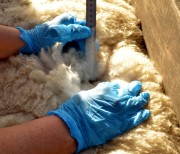
This study focuses on the assessment of monthly sheep wool growth, as a preliminary step to using wool cortisol concentration as a stress indicator. This method, adapted from human techniques, can provide a retrospective record of stressful events in animals, promoting animal welfare practices in sheep production. The research involved 46 Texel sheep, individually identified with electronic tags and tattoos, located in the province of La Pampa. For eight months, wool growth was recorded using a Pie Rtw stainless steel ruler and an electronic tag reader for animal identification. The data collected show an average growth of 1.21 cm per month, with variability attributed to individual and environmental factors. Data analysis, based on a regression model, indicated a significant fit with an R² value of 81%, confirming the consistency of the linear model. Preliminary results suggest that regular measurements of wool growth can be used to monitor animal welfare. The correlation between fibre growth and potential stressful events provides a basis for future research looking to implement wool cortisol measurement as a biomarker of stress in sheep. This approach not only has significant implications for animal welfare, but also supports sustainable practices in wool production, aligning with increasing consumer demands for ethical and high-quality products
References
SENASA. Normas y prácticas para el bienestar animal en la producción ganadera. Servicio Nacional de Sanidad y Calidad Agroalimentaria. 2022. Disponible en : https://www.senasa.gob.ar/
Paranhos da Costa MJR, Huertas SM, Gallo C, Dalla Costa OA. (2012). Strategies to promote farm animal welfare in Latin America and their effects on carcass and meat quality traits, Meat Science 2012; 92(3) 2012, Pages 221-226, https://doi.org/10.1016/j.meatsci.2012.03.005
Odeon MM, Cancino AK, Garramuño J, Romera A. Bienestar animal en la esquila. 2020 Inta Digital. Repositorio institucional. Biblioteca digital. N°74. Disponible en: https://repositorio.inta.gob.ar/xmlui/bitstream/handle/20.500.12123/8684/INTA_CRPatagoniaNorte_EEABarioche_
Odeon_MM_Bienestar_Animal_En_La_Esquila.pdf?sequence=1&isAllowed=y
De Gea G. El ganado lanar en la Argentina. Ed. Univ. Nacional de Río Cuarto. 2004.Cap. II. Lanas. pp.42. https://www.produccion-animal.com.ar/produccion_ovina/produccion_ovina/000 ganado_lanar_en_argentina_libro/01-tapa_y_caratula.pdf
Khan MJ, Abbas A, Ayaz M, Naeem M, Akhter Ms, Soomro MH (2012). Factors affecting wool quality and quantity in sheep. African Journal of Biotechnology 2012. Doi:10.5897/AJBX11.064
Duerden JE, Mare GS. Rate of Growth Month of Merino by Month. Wool. Farmer in South Africa. 1931
Lynch JJ, Hinch GN, Adam DB. The Behaviour of Sheep: Biological Principles and Implications for Production. 1992, ISBN:9780643053298, 0643053298 Pp. 237. Ed. C.A.B. International. Disponible en: https://archive.org/details/behaviourofsheep0000lync/page/n9/mode/2up
Story L F, Ross DA, Effect of shearing time on wool: VI. the rate of growth of wool and its relation to time of shearing. New Zealand Journal of Agricultural Research, 1960; 3(1), 113–124. https://doi.org/10.1080/00288233.1960.10419865
Black JL, Reis PJ. Speculative aspects of the regulation of nutrient partitioning in ruminants. Proceedings of the Nutrition Society of Australia 1979; 4, 137-144.
Adams NR, Briegel JR, Blache D. Consumo de alimento, peso vivo y tasa de crecimiento de la lana en ovejas Merino con diferente sensibilidad al alimento de baja y alta calidad. Australian Journal of Experimental Agriculture, 2002; 42, 399-405.
Hynd PI. Follicular determinants of the length and diameter of wool fibres. 1. Comparison of sheep differing in fibre length/diameter ratio at two levels of nutrition. Crop & Pasture Science 1994; 45, 1137-1147. Disponible en: https://www.semanticscholar.org/paper/Follicular-determinants-of-the-length-and-diameter-Hynd/4ca158fd7cdeb5bad2d60d8b159dd5f5915a451a
Downloads
Published
Issue
Section
License
Copyright (c) 2025 Maria Bettina Gómez, Melina Castillo, Dante Alberto Cerutti, Pedro Vicente Palermo, Melisa Daniela Welch, Julio Enrique Torres, Gonzalo Darío Moreno, Lautaro Avila, Lucas Alfredo Insaurralde, Néstor Hernán Guizzardi , Jose Luis Garat, Francisco Belaustegui, Maria Flavia Castillo, Michel Víctor Huber Hick, Eduardo Narciso Frank, Bibiana Raquel Fabre, Diego Javier González, Federico Fortuna, Juan José Jamardo

This work is licensed under a Creative Commons Attribution-NonCommercial-ShareAlike 4.0 International License.
Al momento de enviar sus contribuciones, los colaboradores deberán declarar , de manera fehaciente, que poseen el permiso del archivo o repositorio donde se obtuvieron los documentos que se anexan al trabajo, cualquiera sea su formato (manuscritos inéditos, imágenes, archivos audiovisuales, etc.), permiso que los autoriza a publicarlos y reproducirlos, liberando a la revista y sus editores de toda responsabilidad o reclamo de terceros , los autores deben adherir a la licencia Creative Commons denominada “Atribución - No Comercial CC BY-NC-SA”, mediante la cual el autor permite copiar, reproducir, distribuir, comunicar públicamente la obra y generar obras derivadas, siempre y cuando se cite y reconozca al autor original. No se permite, sin embargo, utilizar la obra con fines comerciales.
How to Cite





.jpg)