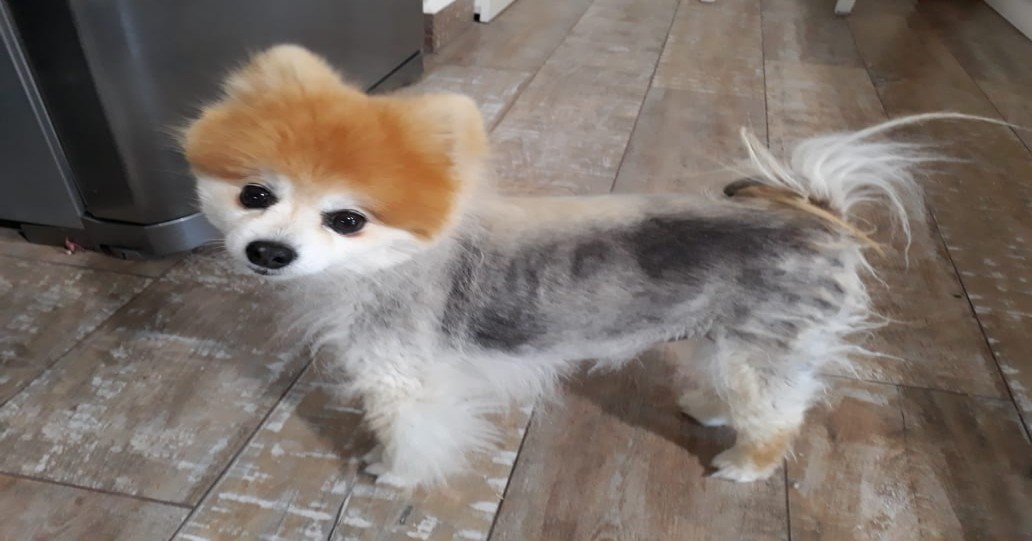
Tratamiento con nanoestructuras en un perro con Alopecia X
DOI:
https://doi.org/10.19137/cienvet.v27.8704Keywords:
Alopecia X, IGF, VEGF, bFGF, Nano copper peptideAbstract
Alopecia X is considered a non-inflammatory pathology, without systemic signs, characterized by the arrest of the hair cycle, common in the Pomeranians, but may occur in other breeds. A healthy, neutered Pomeranian female was treated with hair cycle arrest confirmed for alopecia X and skin dryness. The treatment consisted of a hair spray formulation composed of physiologically balanced growth factors in an alcohol-free aqueous-based solution, with the purpose of stimulating the hair follicle and consequently hair growth. Another composition of moisturizing and nourishing active ingredients was selected for the treatment of dry skin. This promising therapy is easy to administer, has no side effects and is low cost, emerging as an alternative to therapies that cause skin trauma and administration of systemic medications, often without success.
References
Albanese F, Malerba E, Abramo F, Miragliotta V, Fracassi F. Deslorelin for the treatment of hair cycle arrest in intact male dogs. Vet Dermatol. 2014, 25(6), 519-e88.
Cerundolo R, Lloyd DH, Persechino A, Evans H, Cauvin A. Treatment of canine Alopecia X with trilostane. Vet Dermatol. 2004, 15(5), 285-293.
Müntener T, Doherr MG, Guscetti F, Suter MM, Welle MM. The canine hair cycle - a guide for the assessment of morphological and immunohistochemical criteria. Vet Dermatol. 2011, 22(5):383-95.
Stoll S., Dietlin C. & Nett-Mettler C.S. Microneedling as a successful treatment for alopecia X in two Pomeranian siblings. Vet Dermatol. 2015, 26:387-e88.
Bernard BA. Advances in understanding hair growth. F1000 Research. 2016, 8;5:147
Tampucci S, Paganini V, Burgalassi S, Chetoni P, Monti D. Nanostructured drug delivery systems for targeting 5-α-reductase inhibitors to the hair follicle. Pharmaceutics. 2022, 14(2):286.
Brunner MAT, Jagannathan V, Waluk DP, Roosje P, Linek M, Panakova L, Leeb T, Wiener DJ, Welle MM. Novel insights into the pathways regulating the canine hair cycle and their deregulation in Alopecia X. PloS One. 2017, 24;12(10):e0186469
Mausberg EM, Drögemüller C, Dolf G, Leeb T, Rüfenacht S, Welle MM. Evaluation of the CTSL2 gene as a candidate gene for Alopecia X in Pomeranians and Keeshonden. Anim. Biotechnol. 2007, 18(4),291–296.
Wang Z. Regulation of cell cycle progression by growth factor-induced cell signaling. Cells. 2021, 26;10(12):3327.
Moore GP, Du Cros DL, Isaacs K, Pisansarakit P, Wynn PC. Hair growth induction: roles of growth factors. Ann N Y Acad. Sci. 1991, 26:642:308-25.
Weger N, Schlake T. IGF-I signalling controls the hair growth cycle and the differentiation of hair shafts. J Invest Dermatol. 2005, 125(5), 873-882.
Chen CL, WY, Wang EHC, Tai KY, Lin SJ. Functional complexity of hair follicle stem cell niche and therapeutic targeting of niche dysfunction for hair regeneration. J Biomed Sci. 2020, 27(1):43.
Müntener T, Schuepbach-Regula G, Frank L, Rüfenacht S, Welle MM. Canine noninflammatory alopecia: a comprehensive evaluation of common and distinguishing histological characteristics. Vet Dermatol. 2012, 23(3):206-e44.
Gavazzoni K, Marra L, Ferrarini E, Kaltbach V. Use of topic growth factors and minoxidil sulfate in a female dog with black hair follicular dysplasia. 9th World Congress of Veterinary Dermatology; 2020, Sydney, AUS: Vet Dermatol, 31(S1):p1-112(105).
Peus D, Pittelkow MR. Growth factors in hair organ development and the hair growth cycle. Dermatol Clin. 1996,14(4):559-72.
Awuchi CG, Morya S, Dendegh TA, Okpala CO, Korzeniowska M. Nanoencapsulation of food bioactive constituents and its associated processes: A revisit. Bioresour. Technol. 2022, 19, 101088.
Published
Issue
Section
License
Copyright (c) 2025 Kelli Gavazzoni

This work is licensed under a Creative Commons Attribution-NonCommercial-ShareAlike 4.0 International License.
Al momento de enviar sus contribuciones, los colaboradores deberán declarar , de manera fehaciente, que poseen el permiso del archivo o repositorio donde se obtuvieron los documentos que se anexan al trabajo, cualquiera sea su formato (manuscritos inéditos, imágenes, archivos audiovisuales, etc.), permiso que los autoriza a publicarlos y reproducirlos, liberando a la revista y sus editores de toda responsabilidad o reclamo de terceros , los autores deben adherir a la licencia Creative Commons denominada “Atribución - No Comercial CC BY-NC-SA”, mediante la cual el autor permite copiar, reproducir, distribuir, comunicar públicamente la obra y generar obras derivadas, siempre y cuando se cite y reconozca al autor original. No se permite, sin embargo, utilizar la obra con fines comerciales.
How to Cite





.jpg)