Effect of alpha-lipoic acid on rat brain and heart microsomes subjected to oxidative stress induced by ascorbate-Fe++
DOI:
https://doi.org/10.19137/cienvet202426104Keywords:
Alpha-lipoic acid, Oxidative stress, Microsomes, Brain, HeartAbstract
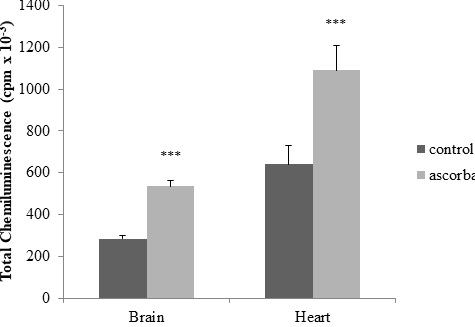
Oxidative stress is caused by the overproduction of reactive oxygen species that generate an imbalance in the cellular antioxidant capacity. In this study, the effect of alpha-lipoic acid on microsomes isolated from rat brain and heart was analyzed by determining chemiluminescence (expressed as counts per minute) and thiobarbituric acid reactive substances. Oxidative stress was induced by subjecting the samples to an ascorbate-Fe++-dependent pro-oxidant system at 37 °C for 120 minutes. The inhibitory effect of alpha-lipoic acid was compared using different concentrations thereof, corresponding to 50, 150 and 250 µg per mg of microsomal protein. Controls were performed simultaneously without the addition of the prooxidant. A significant increase in light emission and malondialdehyde was observed in the microsomes of both organs in the ascorbate-Fe++ group. Analysis of chemiluminescence levels and thiobarbituric acid reactive substances indicated that alpha-lipoic acid acted as an antioxidant that protected rat heart microsomes from damage by lipid peroxidation at all doses tested. In brain microsomes, alpha-lipoic acid was observed to act as an antioxidant only at the 150 µg/ml dose. In the latter case, it will be necessary to test new doses of it to demonstrate the effects on these membranes. In conclusion, alpha-lipoic acid acted as an antioxidant to protect the membranes of both organs against peroxidative damage
Downloads
Published
Issue
Section
License
Copyright (c) 2024 Mariana Beatriz Gavazza, Monica Marmunti, Alejandro Palacios

This work is licensed under a Creative Commons Attribution-NonCommercial-ShareAlike 4.0 International License.
Al momento de enviar sus contribuciones, los colaboradores deberán declarar , de manera fehaciente, que poseen el permiso del archivo o repositorio donde se obtuvieron los documentos que se anexan al trabajo, cualquiera sea su formato (manuscritos inéditos, imágenes, archivos audiovisuales, etc.), permiso que los autoriza a publicarlos y reproducirlos, liberando a la revista y sus editores de toda responsabilidad o reclamo de terceros , los autores deben adherir a la licencia Creative Commons denominada “Atribución - No Comercial CC BY-NC-SA”, mediante la cual el autor permite copiar, reproducir, distribuir, comunicar públicamente la obra y generar obras derivadas, siempre y cuando se cite y reconozca al autor original. No se permite, sin embargo, utilizar la obra con fines comerciales.
How to Cite





.jpg)