Alternatives to extend beef shelf life: combined effect of UV-C light and Rosmarinus officinalis L. essential oil on superficial colour
DOI:
https://doi.org/10.19137/cienvet202426102Keywords:
Redness, Discoloration, Refrigerated storage, Natural antioxidants, Shortwave ultraviolet irradiation, Essential oilsAbstract
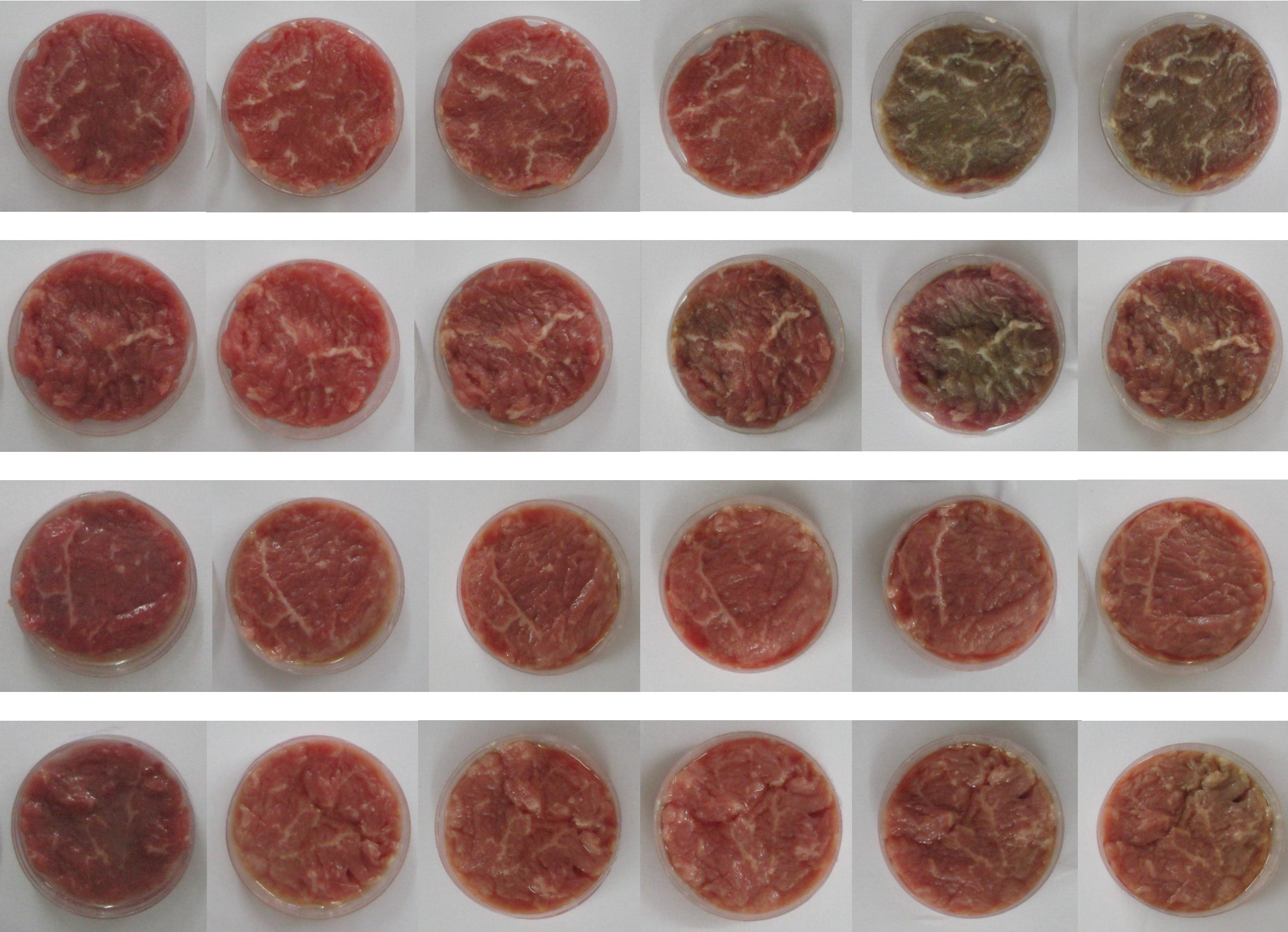
In recent years, the use of alternative strategies to reduce the meat microbial load has been explored, among them the application of UV-C radiation and essential oils, seeking not to affect its sensory quality. In this study, the effect of the application of rosemary essential oil (REO) (5 %) and UV-C light (dose: 0,56 J/cm2) individually and combined on the colour stability of beef (Longissimus dorsi muscle) was studied. Four groups of samples were used: treated with UV-C light (I), with REO/lactic acid solution (R), with both treatments (I+R) and without treatment (C).Samples were stored at 0, 4 and 8 °C for 20, 14 and 8 days, respectively. To monitor surface colour changes, the parameters lightness (L*), redness (a*) and yellowness (b*) were obtained using a computer vision system and the total colour change (ΔE) was calculated. L* did not show significant changes (p>0,05) in any of the situations studied, with the a* coordinate being the one that best represented the observed changes. The greatest decrease in this parameter was observed in samples (C) and (I), while the application of REO allowed the a* value to be maintained without significant variations. Regarding ΔE, it presented a similar trend to a*, showing the capacity to delay the oxidation of the REO/lactic acid solution. In conclusion, theapplication of UV-C light together with the REO/lactic acid solution would delay the
deterioration of the surface colour of fresh meat during refrigerated storage
Downloads
Published
Issue
Section
License
Copyright (c) 2024 Mariana Fernandez Blanco, Daniela F. Olivera, Fernanda Coll Cárdenas

This work is licensed under a Creative Commons Attribution-NonCommercial-ShareAlike 4.0 International License.
Al momento de enviar sus contribuciones, los colaboradores deberán declarar , de manera fehaciente, que poseen el permiso del archivo o repositorio donde se obtuvieron los documentos que se anexan al trabajo, cualquiera sea su formato (manuscritos inéditos, imágenes, archivos audiovisuales, etc.), permiso que los autoriza a publicarlos y reproducirlos, liberando a la revista y sus editores de toda responsabilidad o reclamo de terceros , los autores deben adherir a la licencia Creative Commons denominada “Atribución - No Comercial CC BY-NC-SA”, mediante la cual el autor permite copiar, reproducir, distribuir, comunicar públicamente la obra y generar obras derivadas, siempre y cuando se cite y reconozca al autor original. No se permite, sin embargo, utilizar la obra con fines comerciales.
How to Cite





.jpg)