Study of the possible causes of post mating reproductive losses in beef cattle farming in Northwest Argentine
DOI:
https://doi.org/10.19137/cienvet202426103Keywords:
Breeding cow, survey, abortigenic diseases, mineral profiles, province of Salta., Breeding cowAbstract
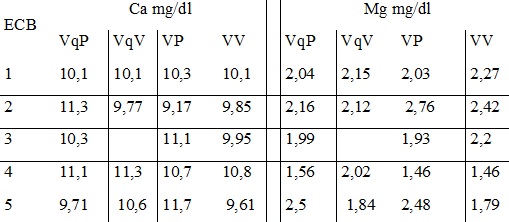
With the purpose of diagnosing the presence of possible causes of reproductive losses, 4 groups of breeding females were surveyed and formed afterthe mated period ended in 5 beef cow-calf ranches (BCR) of Salta province. The in each BCR were: PC, pregnant cows (n=15), PH, pregnant heifers (n=15), NPC, no pregnant cows (n=10) and NPH, no pregnant heifers (n=10). At pregnancy diagnosis, body condition (BC) was recorded and females were sampled fordiagnosis of brucellosis, bovine viral diarrhea virus (BVD), bovine herpesvirus 1, bovine rhinotracheitis (IBR), neosporosis and leptospirosis. Blood Se values and serum Cu, Zn, Mg, Ca and thyroxine (T4) were determined. In the 5 BCRs, a greater (p<0.05) BC was found in the PC than in the NPC. No venereal diseases were diagnosed in the bulls. The prevalence and/or serum titers for the infectious diseases investigated were generally low, with no differences between groups, except in 2 BCRs where the seroprevalence of antibodies to Neospora caninum was higher (p<0.01) in NPC than in PC. Se, Ca, Mg and T4 values were normal and did not show differences between groups, but in one BCR there were
animals with marginal Se values. With the exception of one BCR, groups had marginal Cu deficiencies. Three BCR presented marginal levels of Zn. These results indicate the probable importance of diet, micromineral deficiencies and neosporosis and encourage further studies to improve the reproductive rates
Downloads
Published
Issue
Section
License
Copyright (c) 2024 Leandro H. Olmos, Mara L. Martínez, Victor Humberto Suarez, Juan F. Micheloud, Gabriela M. Martínez, Luis A. Colque Caro, Enrique L. Louge Uriarte, Andrea E. Verna, María Laura Gos

This work is licensed under a Creative Commons Attribution-NonCommercial-ShareAlike 4.0 International License.
Al momento de enviar sus contribuciones, los colaboradores deberán declarar , de manera fehaciente, que poseen el permiso del archivo o repositorio donde se obtuvieron los documentos que se anexan al trabajo, cualquiera sea su formato (manuscritos inéditos, imágenes, archivos audiovisuales, etc.), permiso que los autoriza a publicarlos y reproducirlos, liberando a la revista y sus editores de toda responsabilidad o reclamo de terceros , los autores deben adherir a la licencia Creative Commons denominada “Atribución - No Comercial CC BY-NC-SA”, mediante la cual el autor permite copiar, reproducir, distribuir, comunicar públicamente la obra y generar obras derivadas, siempre y cuando se cite y reconozca al autor original. No se permite, sin embargo, utilizar la obra con fines comerciales.
How to Cite





.jpg)