First description of Oesophagostomum venulosum (Rudolphi, 1809) (Nematoda: Chabertiidae) in a goat from Northwestern
DOI:
https://doi.org/10.19137/cienvet202325205Keywords:
Oesophagostomum venulosum, Caprine, Gastrointestinal nematodes, Argentine northwestAbstract
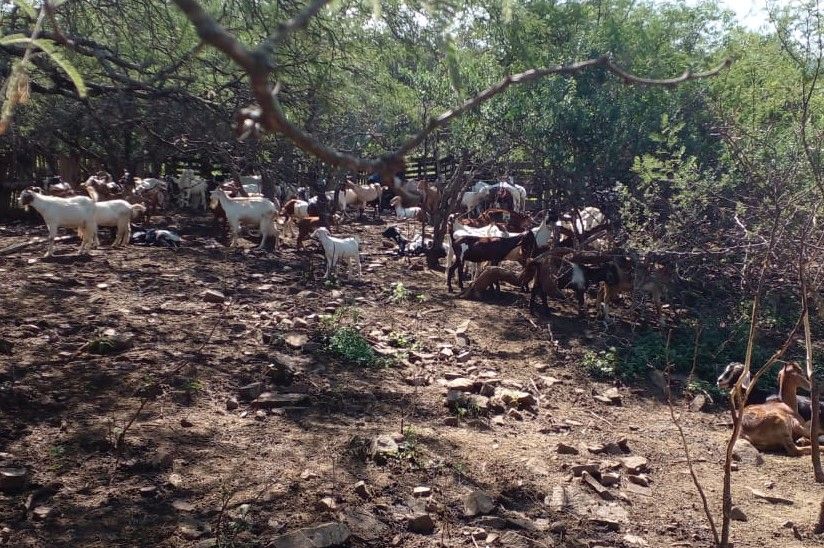
Oesophagostomum venulosum is a gastrointestinal nematode (GIN) whose hosts are mainly sheep and goats. In Argentina, the presence of this parasite is reported in all regions of the country, mainly in sheep. In the Argentine Northwest (NOA) it is reported in cattle and camelids. The objective of this work was to describe for the first time the presence of O. venulosum in goats from the NOA region. In March 2023, the INTA Salta Specialized Veterinary Diagnostic Service made a diagnostic visit to a Criolla breed goat breeding facility, located near the capital city of Salta, Argentina. The reason for the visit was due to the death of a goat that, according to the account of the owner, prior to her death, presented symptoms of colic and dyspnea, with progressive loss of body condition. Given the suspicion of a parasitic condition, it was decided to collect the digestive tract for the determination of adult specimens. It was possible to observe the presence of Haemonchus contortus in the abomasum, of Trichostrongylus colubriformis in the small intestine, and of O. venulosum in the colon. The finding of O. venulosum in caprines adds to the reports of said NGI in other animal species of zootechnical interest in the NOA, and is, to our knowledge, the first description in caprines nationwide.
Downloads
Published
Issue
Section
License
Al momento de enviar sus contribuciones, los colaboradores deberán declarar , de manera fehaciente, que poseen el permiso del archivo o repositorio donde se obtuvieron los documentos que se anexan al trabajo, cualquiera sea su formato (manuscritos inéditos, imágenes, archivos audiovisuales, etc.), permiso que los autoriza a publicarlos y reproducirlos, liberando a la revista y sus editores de toda responsabilidad o reclamo de terceros , los autores deben adherir a la licencia Creative Commons denominada “Atribución - No Comercial CC BY-NC-SA”, mediante la cual el autor permite copiar, reproducir, distribuir, comunicar públicamente la obra y generar obras derivadas, siempre y cuando se cite y reconozca al autor original. No se permite, sin embargo, utilizar la obra con fines comerciales.
How to Cite





.jpg)