An approach to the characteristics of the carcass and meat of New Zealand breed rabbits
DOI:
https://doi.org/10.19137/cienvet202224102Keywords:
alternative livestock productions, tenderness, carcass divisionAbstract
The rabbit produces healthy meat, generating low methane emissions, and without competing for grain and other food resources for humans, hence adequately responding to the principles of the bioeconomy. For these properties to have a positive impact on society, it is necessary to promote the production and consumption of rabbit meat. Therefore, we evaluate the quality of carcass and meat of New Zealand breed rabbits
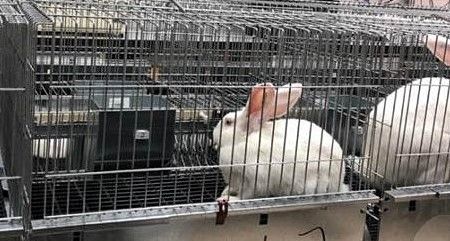
was assessed in 12 males reared under commercial conditions and slaughtered at two months of age under standard conditions. The average weight of animals at slaughter was 2.6 kg, and their carcass had a yield, length and compactness index of 52.6%, 32.6 cm and 41.29 g/
cm, respectively. The carcass measurements offered average percentages of 38.2%, 27.4%, 18.7% and 14.8% for the legs, loin, thorax, and shoulders, respectively. The pH of the meat was at normal values and the pressure and cooking losses and tenderness showed mean values
of 12.8%, 26.6% and 3.1 Kg/cm2, respectively. The chromatic variables showed mean values of L * = 46.9, a * = 0.54 and b * = 8.14. These results are in line with those reported for industrial breeds.
Downloads
Published
Issue
Section
License
Al momento de enviar sus contribuciones, los colaboradores deberán declarar , de manera fehaciente, que poseen el permiso del archivo o repositorio donde se obtuvieron los documentos que se anexan al trabajo, cualquiera sea su formato (manuscritos inéditos, imágenes, archivos audiovisuales, etc.), permiso que los autoriza a publicarlos y reproducirlos, liberando a la revista y sus editores de toda responsabilidad o reclamo de terceros , los autores deben adherir a la licencia Creative Commons denominada “Atribución - No Comercial CC BY-NC-SA”, mediante la cual el autor permite copiar, reproducir, distribuir, comunicar públicamente la obra y generar obras derivadas, siempre y cuando se cite y reconozca al autor original. No se permite, sin embargo, utilizar la obra con fines comerciales.
How to Cite





.jpg)