Triatomine Epidemiology in the Province of Río Negro

Authors

  • Pablo Crowley Ministry of Health of the Province of Río Negro Viedma, Argentina
  • Jose Luis Labanchi Ministerio de Salud de la Provincia de Río Negro Viedma, Argentina
  • Martín Dade Escuela de Veterinaria y Producción Agroindustrial de la Universidad Nacional de Río Negro
  • Martin Daniele Escuela de Veterinaria y Producción Agroindustrial de la Universidad Nacional de Río Negro
  • Arnoldo Calabro Ministerio de Salud de la Provincia de Río Negro, Viedma, Argentina
  • Claudia Ministerio de Salud Provincia de Río Negro- Salud Ambiental Gral Roca. Rio Negro
  • Alexis Ochoa Ministerio de Salud Provincia de Río Negro- Salud Ambiental Choele Choel
  • Paula Hernandez Ministerio de Salud de la Provincia de Río Negro. Viedma, Argentina
  • Marcos Arezo Departamento Zoonosis. Ministerio de Salud. Río Negro.
  • Edmundo Juan Larrieu Escuela de Veterinaria y Producción Agroindustrial de la Universidad Nacional de Río Negro, Pacheco 460 CP 8360, Choele Choel, Argentina.

DOI:

https://doi.org/10.19137/cienvet202123203

Keywords:

Chagas disease, triatoma, epidemiology, control

Abstract

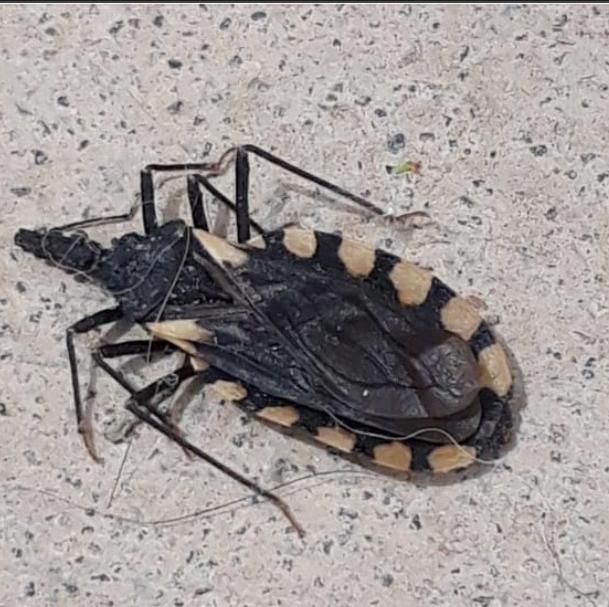
Chagas is an endemic epidemic disease of vector transmission in the Province of Rio Negro caused by Trypanosoma cruzi, transmitted by triatomines. The Chagas control program in the province of Rio Negro certified, through serological and entomological indicators, the interruption of vector transmission throughout the province. However, in recent years, conditions have been generated that may allow the re-emergence of the disease, such as the eventual domiciliation of wild vinchucas such as T patagonico. The objective was to evaluate the epidemiological situation of the vector through studies of home and peri-home infestation by triatomines and to carry out resistance analyzes to insecticides that were applied for many years in control. As a result, 143 homes were evaluated and 66 light traps were placed. In the intra-domicile all the dwellings were negative, with 3 being positive in the peri-domicile (2.1%) with captures of T-infestans and T. patagonica. No triatomines were captured with the light traps. The captured triatomines were T. infestans and T. patagonica, which were all negative for T. cruzi. Insecticide resistance studies showed that the colonies are still susceptible to deltamethrin.
colonies are still susceptible to deltamethrin.
Author Biographies

  • Pablo Crowley, Ministry of Health of the Province of Río Negro Viedma, Argentina

    Medico Veterinario. Especialista en Salud Pública Veterinaria.  Docente de la UNRN. Coordinador de Salud Ambiental con sede en Choele Choel . Rio Negro.

  • Jose Luis Labanchi, Ministerio de Salud de la Provincia de Río Negro Viedma, Argentina

    Medico Veterinario  Coordinador Salud Ambiental Roca.
    Especialista en Salud Pública Veternaria.  Docente Universidad Nacional de Rio Negro

  • Arnoldo Calabro, Ministerio de Salud de la Provincia de Río Negro, Viedma, Argentina

    Medico Veterinario – Supervisor de Salud Ambiental en Área Programa de SAO con misiones y funciones dentro
    del programa de zoonosis de llevar adelante actividades de vigilancia. Rio Negro. Argentina

  • Claudia, Ministerio de Salud Provincia de Río Negro- Salud Ambiental Gral Roca. Rio Negro

    Medico Veterinario – Supervisor de Salud Ambiental en Área Programa de Gral Roca con misiones y funciones dentro del programa de zoonosis de llevar adelante actividades de vigilancia.

  • Alexis Ochoa, Ministerio de Salud Provincia de Río Negro- Salud Ambiental Choele Choel

    Medico Veterinario – Supervisor de Salud Ambiental en Área Programa de Choele Choel con misiones y funciones dentro del programa de zoonosis de llevar adelante actividades de vigilancia

  • Marcos Arezo, Departamento Zoonosis. Ministerio de Salud. Río Negro.

    Formación: Med. Veterinario; Especialista en Salud Pública Veterinaria, Máster en Aplicaciones Espaciales de Alerta y Respuesta Temprana a Emergencias y Epidemiología Espacial.Investigación: Relacionadas con Epidemiología Espacial y Zoonosis. Tutoría de Investigación en IZSVe Italia. Profesional: Desempeño a cargo de programas como CHAGAS y Depto. Zoonosis del Ministerio de Salud de Río Negro.

  • Edmundo Juan Larrieu, Escuela de Veterinaria y Producción Agroindustrial de la Universidad Nacional de Río Negro, Pacheco 460 CP 8360, Choele Choel, Argentina.

    Doctor en Epidemiologia. Profesor Catedra de `Epidemiologia y Salud Publica en UNRN, ex Jefe Programa de control de la Hidatidosis, Ministerio de Salud de Rio Negro. Vicepresidente Asociación Internacional Hidatidologia

Published

2021-10-20

Issue

Section

Artículos de Investigación

How to Cite

Triatomine Epidemiology in the Province of Río Negro. (2021). Veterinary Science, 23(2), 91-100. https://doi.org/10.19137/cienvet202123203