Viabilidad y fertilidad de quistes hidatídicos en el ganado en la Provincia de La Pampa y evaluación de una alternativa para la producción de Echinococcus granulosus adultos
Viability and fertility of hydatid cysts in cattle in the Province of La Pampa and evaluation of an alternative for the production of adult Echinococcus granulosus
DOI:
https://doi.org/10.19137/cienvet.v28.9864Palabras clave:
Equinococosis, Diagnóstico, Rumiantes, Meriones. (Meriones Unguiculatus.)Resumen
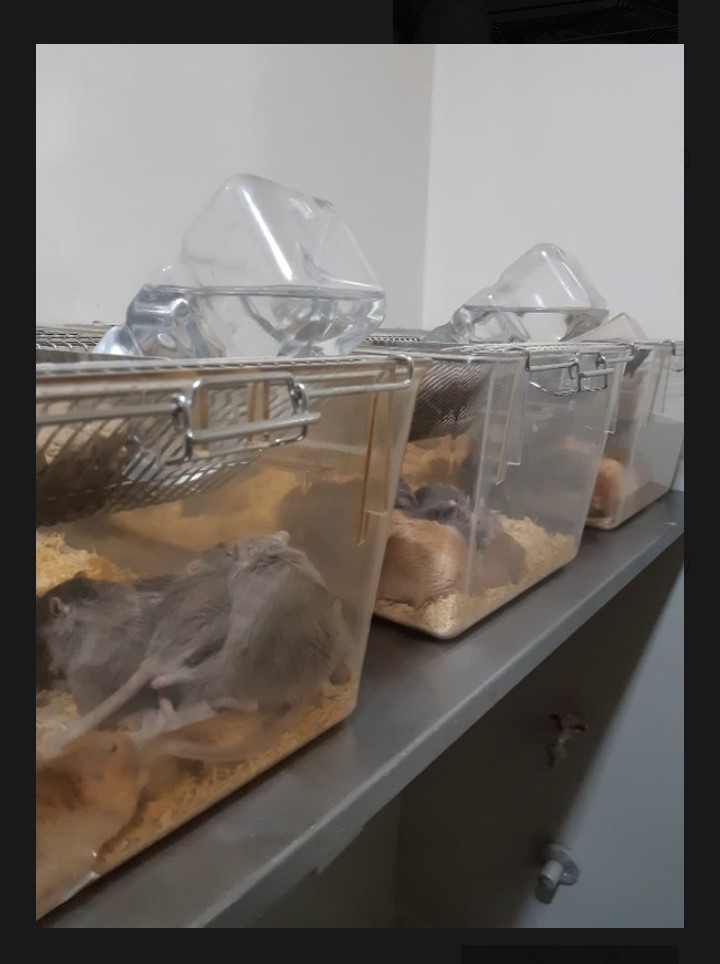
La Equinococosis quística (EQ) o hidatidosis es una zoonosis parasitaria, endémica en Argentina en regiones donde las condiciones sociales, culturales y ambientales generan un ambiente epidemiológico que favorecen el ciclo del Echinococcus granulosus. En la Provincia de La Pampa existen reportes de alta prevalencia en bovinos, aunque no existen estudios actualizados de prevalencia y los factores de riesgo que podrían significar transmisión a las personas, especialmente en el oeste pampeano, región históricamente con mayor prevalencia. Una limitación actual en EQ es la falta de sistemas diagnósticos específicos en perros, por limitaciones en la producción de antígenos y antisueros. El objetivo de la investigación fue identificar quistes hidatídicos mediante diagnóstico macroscópico en salas de faena y evaluar una alternativa para la producción de Echinococcus granulosus adultos en meriones (Meriones unguiculatus) para la obtención de parásitos adultos a partir de la administración de escólices obtenidos de quistes hidatídicos fértiles de frigorífico en el CePAE (Centro de Producción de animales de experimentación)
Referencias
Craig P, Mastin A, van Kesteren F, Boufana B. Echinococcus granulosus: Epidemiology and state-of-the-art of diagnostics in animals. Vet Parasitol. 2015; 13(3-4):132-48.
Larrieu E, Zanini F. Critical analysis of the strategies to control cystic echinococcosis and the use of praziquantel in South America: 1980 – 2009. Rev Panam Salud Pública. 2012; 31:81-7.
Pavletic CF et al. Cystic echinococcosis in South America: a call for action. Rev Panam S Publica. 2017; 21,41: e42
Bingham GM et al. The Economic Impact of Cystic Echinococcosis in Rio Negro Province, Argentina. Am J Trop Med Hyg. 2016; 94(3):615-25.
Lamberti R et al. Hydatidosis in the province of La Pampa, Argentina. Bol Chil Parasitol. 1999; 54(3-4):110-2.
Larrieu E et al. Hydatidosis/echinococcosis in General Acha, La Pampa Province, Argentina. Bol Chil Parasitol. 1996; 51(3-4):95-7
Sykes AL, Larrieu E, Poggio TV, Céspedes MG, Mujica GB, Basáñez MG, Prada JM. Modelling diagnostics for Echinococcus granulosus surveillance in sheep using Latent Class Analysis: Argentina as a case study. One Health. 2021; 4; 14:100359.
Lamberti R et al. Humoral response and follow-up to Echinococcus infection in experimentally infected sheep. Rev Bra Parasit Vet. 2014; 23(2):237-40.
Craig PS, Hegglin D, Lightowlers MW, Torgerson PR, Wang Q. Echinococcosis: Control and Prevention. In: Thompson RCA, Deplazes P, Lymbery A J, (Eds.), Echinococcus and Echinococcosis, 2017; Part B, pp. 55–158.
Guarnera E, Santillan G, Botinelli R, Franco A. Canine echinococcosis: an alternative for surveillance epidemiology. Vet Parasitol 2000; 88:131-134
Morel N el al. A monoclonal antibody-based copro-ELISA kit for canine echinococcosis to support the PAHO effort for hydatid disease control in South America PLoS Negl Trop Dis. 2013: 7: e1967
Pierangeli ND et al. Usefulness and validation of a coproantigen test for dog echinococcosis screening in the consolidation phase of hydatid control in Neuquén, Argentina. Parasitol In. 2010; 59:394–399
Pérez A et al. Epidemiological surveillance of cystic echinococcosis in dogs, sheep farms and humans in the Rio Negro Province. Medicina (B Aires). 2006; 66(3):193-200
Cabrera M, Canova S, Rosenzvit M, Guarnera E. Identification of Echinococcus granulosus eggs. Diagn Microbiol Infect 2002; 44:29-34
Larrieu E, Gavidia CM, Lightowlers MW. Control of cystic echinococcosis: Background and prospects. Zoonoses Public Health. 2019; 66(8):889-899.
Jercic MI et al. First inter-laboratory comparison of Echinococcus granulosus sensu lato diagnosis in Latin America. Rev Panam Salud Publica. 2019; 9;43: e89.
Conchedda M, Gabriele F, Bortoletti G. Development and sexual maturation of Echinococcus granulosus adult worms in the alternative definitive host, Mongolian gerbil (Meriones unguiculatus). Acta Tropica. 2006; 97:119–125
Larrieu E, Vieira Alves R, Vigilato M. Control de equinococosis quística: perspectivas en el siglo XXI. Rev Panam Salud Publica. 2025; 13;49: e13.
Descargas
Publicado
Número
Sección
Licencia
Derechos de autor 2026 Claudio Calvo, Facundo Matías De Marco Trebin, Pilar Meglia, Cecilia Schiaffino, Ana Inés Portu, Marcos Adrián Moreno, Leonardo Molina, Franco Lucero Arteaga, Ramiro Portillo, Laura Crivelli, Tamara Cornejo, Natalia Cazaux, Guillermina Bilbao, Florencia D'Francisco, Cecilia Lapuyade, Mónica Boeris, Edmundo Juan Larrieu

Esta obra está bajo una licencia internacional Creative Commons Atribución-NoComercial-CompartirIgual 4.0.
Al momento de enviar sus contribuciones, los colaboradores deberán declarar , de manera fehaciente, que poseen el permiso del archivo o repositorio donde se obtuvieron los documentos que se anexan al trabajo, cualquiera sea su formato (manuscritos inéditos, imágenes, archivos audiovisuales, etc.), permiso que los autoriza a publicarlos y reproducirlos, liberando a la revista y sus editores de toda responsabilidad o reclamo de terceros , los autores deben adherir a la licencia Creative Commons denominada “Atribución - No Comercial CC BY-NC-SA”, mediante la cual el autor permite copiar, reproducir, distribuir, comunicar públicamente la obra y generar obras derivadas, siempre y cuando se cite y reconozca al autor original. No se permite, sin embargo, utilizar la obra con fines comerciales.
Cómo citar





.jpg)