
Differential sensitivity of durum wheat, barley and oat to pyroxasulfone
DOI:
https://doi.org/10.19137/semiarida.2026(2).5-16Keywords:
residual herbicide, minor cereals, winter cerealsAbstract
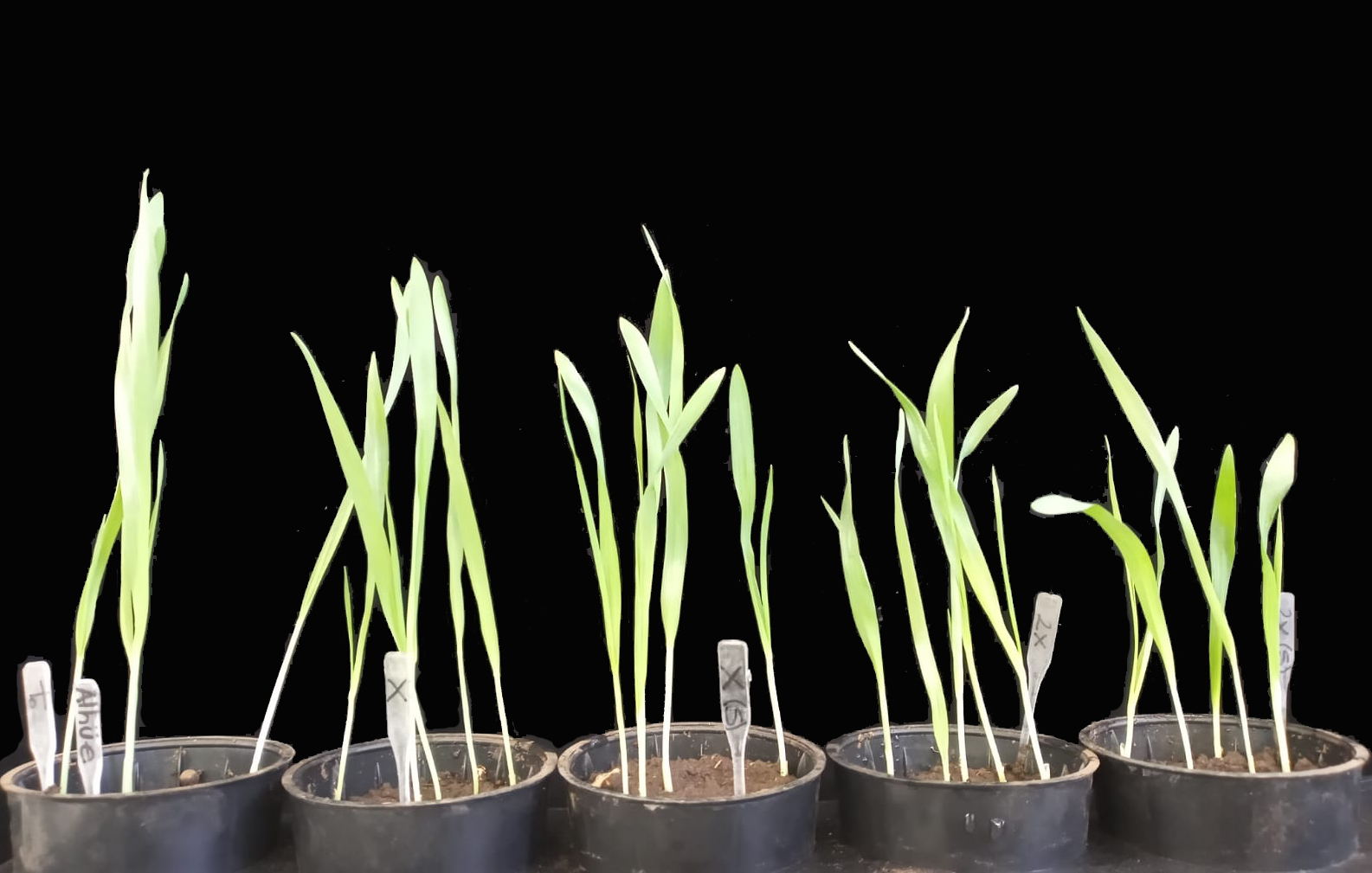
Durum wheat, barley, and oats are regionally important crops in Argentina, and unlike major cereals, few herbicides are registered for weed control, particularly for grass species. The objective of this study was to determine whether interspecific variation in sensitivity to the herbicide pyroxasulfone exists among durum wheat, barley, and oats. Herbicide response was evaluated through plumule growth assays in Petri dishes, pot experiments in a growth chamber, and field trials. A total of 15 durum wheat varieties, 11 barley varieties, and 11 oat varieties were assessed under different pyroxasulfone doses. Glutathione S-transferase (GST) enzymatic activity was quantified as a detoxification mechanism potentially involved in differential sensitivity. Across all experimental approaches, oats consistently showed the greatest sensitivity to herbicide, exhibiting significantly lower relative growth than the other two cereals. In most experiments, barley was less sensitive to pyroxasulfone than durum wheat. GST activity results indicated that greater herbicide sensitivity was associated with higher enzymatic activity rates. Under field conditions, rainfall was a key factor influencing crop response to pyroxasulfone; across the wide germplasm evaluated, the findings highlight the need to consider multiple variables for the safe and effective use of pyroxasulfone in agricultural systems.
References
Andrade, F. H. (2016). Los desafíos de la agricultura. Editorial International Plant Nutrition Institute.
Brazier-Hicks, M., Franco-Ortega, S., Watson, P., Rougemont, B., Cohn, J., Dale, R., & Edwards, R. (2022). Characterization of Cytochrome P450s with Key Roles in Determining Herbicide Selectivity in Maize. ACS Omega, 7(20), 17416-17431. https://doi.org/10.1021/acsomega.2c01705
Busi, R., Porri, A., Gaines, T. A., & Powles, S. B. (2018). Pyroxasulfone resistance in Lolium rigidum is metabolism-based. Pesticide Biochemistry and Physiology, 148, 74-80. https://doi.org/10.1016/j.pestbp.2018.03.017
Cámara de Sanidad Agropecuaria y Fertilizantes (2020). Industria de fitosanitarios en Argentina. https://www.casafe.org/archivos-descarga/Informe-Casafe-Industria-de-Fitosanitarios-en-Argentina.pdf
Chamorro, A. M. (2018). Análisis del impacto sobre la sustentabilidad de la difusión de la colza y de la cebada en reemplazo del trigo en la secuencia trigo/soja 2ª en el Partido de Tres Arroyos [Tesis doctorado], Universidad Nacional de La Plata, Argentina. https://sedici.unlp.edu.ar/bitstream/handle/10915/68806/Documento_completo.pdf? sequence=1
Chhokar, R. S., Sharma, R. K., & Sharma, I. (2012). Weed management strategies in wheat-A review. Journal of Wheat Research, 4(2), 1-21. https://api.semanticscholar.org/CorpusID:86268850
Cummins, I., Wortley, D. J., Sabbadin, F., He, Z., Coxon, C. R., Straker, H. E., ... & Edwards, R. (2013). Key role for a glutathione transferase in multiple-herbicide resistance in grass weeds. Proceedings of the National Academy of Sciences, 110(15), 5812-5817. https://doi.org/10.1073/pnas.1221179110
Di Rienzo, J. A., Casanoves, F., Balzarini, M. G., Gonzalez, L., Tablada, M. y Robledo, C. W. (2008). InfoStat (Versión 2008) [Software de computación]. Grupo InfoStat. http://www.infostat.com.ar
FAO. (2002). El estado mundial de la pesca y la acuicultura, 2002. Food & Agriculture Org.
FAO. (2024). FAOSTAT data: Food and Agriculture Organization of the United Nations. https://www.fao.org/faostat/en/#data
Flores, A. O. (2020). Rol de la glutatión-S-transferasa y del citocromo P450 en la resistencia metabólica a herbicidas en Lolium rigidum de cereales de invierno. [Tesis de Maestría], Universitat de Lleida, España. http://hdl.handle.net/10459.1/69446
Gerhards, R., Messelhäuser, M. H., & Sievernich, B. (2022). Suppressing Alopecurus myosuroides in winter cereals by delayed sowing and pre-emergence herbicides. Plant Soil Environment, 68(6), 290-298. https://doi.org/10.17221/118/2022-PSE
Gitsopoulos, T., Georgoulas, I., Botsoglou, D., & Vazanelli, E. (2024). Response of Wheat to Pre-Emergence and Early Post-Emergence Herbicides. Agronomy, 14(8), 1875. https://doi.org/10.3390/agronomy14081875
GraphPad Software. (2018). GraphPad Prism (Versión 8.0) [Software de computación]. https://www.graphpad.com
Han, H., Yu, Q., Vila-Aiub, M., & Powles, S. B. (2014). Genetic inheritance of cytochrome P450-mediated metabolic resistance to chlorsulfuron in a multiple herbicide resistant Lolium rigidum population. Crop Protection, 65, 57-63. https://doi.org/10.1016/j.cropro.2014.07.014
Iwakami, S., Endo, M., Saika, H., Okuno, J., Nakamura, N., Yokoyama, M., Watanabe, H., Toki, S., Uchino, A. & Inamura, T. (2014). Cytochrome P450 CYP81A12 and CYP81A21 are associated with resistance to two acetolactate synthase inhibitors in Echinochloa phyllopogon. Plant Physiology, 165(2), 618-629. https://doi.org/10.1104/pp.113.232843
Iwakami, S., Kamidate, Y., Yamaguchi, T., Ishizaka, M., Endo, M., Suda, H., Nagai, K., Sunohara, Y., Toki, S., Uchino, A., Tominaga, T., & Matsumoto, H. (2019). CYP 81A P450s are involved in concomitant cross‐resistance to acetolactate synthase and acetyl‐CoA carboxylase herbicides in Echinochloa phyllopogon. New Phytologist, 221(4), 2112-2122. https://doi.org/10.1111/nph.15552
Jablonkai, I., & Hatzios, K. K. (1991). Role of glutathione and glutathione S-transferase in the selectivity of acetochlor in maize and wheat. Pesticide Biochemistry and Physiology, 41(3), 221-231. https://doi.org/10.1007/978-94-015-8927-7_11
Klauk, B., & Petersen, J. (2023). Influence of Sowing Date of Winter Cereals on the Efficacy of Cinmethylin on Alopecurus myosuroides (Huds.). Agronomy, 13(1), 37. https://doi.org/10.3390/agronomy13010037
Larran, A.S. (2019). Resistencia a herbicidas en poblaciones del género Amaranthus: mecanismos moleculares y expresión de alelos als resistentes en plantas de A. Thaliana y trigo. [Tesis de Doctorado], Universidad Nacional de Rosario, Argentina. http://hdl.handle.net/11336/80972
MAGyA. (2023). Estadísticas de producción y superficie por cultivo. Ministerio de Agricultura, Ganadería y Pesca de Argentina. http://www.magyp.gob.ar/
Monaco, T. J., Weller, S. C., & Ashton, F. M. (2002). Weed science: principles and practices 4th edn. (pp 80). Ed. John Wiley & Sons.
Nakatani, M., Yamaii, Y., Honda, H., & Uchida, Y. (2016) Development of the novel pre-emergence herbicide pyroxasulfone. Journal of Pesticide Science, 41(3), 107-112. https://doi.org/10.1584/jpestics.J16-05
Owen, W. (1991). Herbicide Metabolism as a Basis for Selectivity. In W. Owen, Target Sites for Herbicide Action. Topics in Applied Chemistry (pp 285–314). Springer, Boston, MA: Kirkwood, R.C. (Eds). https://doi.org/10.1007/978-1-4899-2433-9_11
Powles, S. B., & Yu, Q. (2010). Evolution in Action: Plants Resistant to Herbicides. Annual Review of Plant Biology, 61, 317-347. https://doi.org/10.1146/annurev-arplant-042809-112119
Reade, C. A. (2010). Herbicides and Plant. Editorial Wiley. Blackwell. https://doi.org/10.1002/9781444327793
Robin, S. K., Ansari, M., y Uppugunduri, C. R. (2020). Spectrophotometric Screening for Potential Inhibitors of Cytosolic Glutathione S-Transferases. Journal of Visualized Experiments, (164), e61347. https://doi.org/10.3791/61347
Rochalska, M., & Grabowska, K. (2007). Influence of magnetic fields on the activity of enzymes: a- and b-amylase and glutathione S-transferase (GST) in wheat plants. International Agrophysics, 21(2), 185-188. https://doi.org/10.2478/v10102-008-0008-x
Servicio Nacional de Sanidad y Calidad Agroalimentaria (SENASA). (2018). Resolución 829/2018: Cultivos menores. https://www.argentina.gob.ar/normativa/nacional/resoluci%C3%B3n-829-2018-316471
Servicio Nacional de Sanidad y Calidad Agroalimentaria (SENASA). (2022). Registro Nacional de Terapéutica Vegetal. https://aps2.senasa.gov.ar/vademecum/app/publico
Shen, J., Yang, Q., Hao, L., Zhang, L., Li, X., & Zheng, M. (2022). The Metabolism of a Novel Cytochrome P450 (CYP77B34) in Tribenuron-Methyl-Resistant Descurainia sophia L. to Herbicides with Different Mode of Actions. International Journal of Molecular Sciences, 23(10), 5812. https://doi.org/10.3390/ijms23105812
Soltani, N., Shropshire, C., & Sikkema, P. H. (2012) Response of Spring Planted Cereals to Pyroxasulfone. International Research Journal of Plant Science, 3(6), 113-119. https://www.interesjournals.org/articles/response-of-spring-planted-cereals-to-pyroxasulfone.pdf
Thill, D. C., & Lemerle, D. (2001). World wheat and herbicide resistance. In Herbicide resistance and world grains. (pp. 165-194). CRC Press. https://doi.org/10.1201/9781420039085
Yamahi, Y., Honda, H., Hanai, R., & Inoue, J. (2016). Soil and environmental factors affecting the efficacy of pyroxasulfone for weed control. Journal of Pesticide Science, 41(1), 1-5. https://doi.org/10.1584/jpestics.D15-047
Yanniccari, M., Gigón, R., & Larsen, A. (2020). Cytochrome P450 herbicide metabolism as the main mechanism of cross-resistance to ACCase-and ALS-inhibitors in Lolium spp. populations from Argentina: a molecular approach in characterization and detection. Frontiers in Plant Science, 11, 600301. https://doi.org/10.3389/fpls.2020.600301
Yanniccari, M., & Gigón, R. (2020) Cross-resistance to acetyl-CoA carboxylase–inhibiting herbicides conferred by a target-site mutation in perennial ryegrass (Lolium perenne) from Argentina. Weed Science. https://doi.org/10.1017/wsc.2020.1
United States Department of Agriculture, Foreign Agricultural Service. (2024). Production, Supply and Distribution (PSD) by crop [Base de datos]. https://www.fas.usda.gov/data
Walsh, M. J., Fowler, T. M., Crowe, B., Ambe, T., & Powles, S. B. (2011) The Potential for Pyroxasulfone to Selectively Control Resistant and Susceptible Rigid Ryegrass (Lolium rigidum) Biotypes in Australian Grain Crop Production Systems. Weed Technology, 25, 30-37. https://ahri.uwa.edu.au/wp-content/uploads/2014/10/433-Michael-Walsh-2011-paper.pdf
Zandstra, B., & Patricka, M. (2004). Guide to tolerance of crops and suceptibility of weeds to herbicides. Kentucky: Michigan State University. https://www.canr.msu.edu/uploads/resources/pdfs/Guide_To_Tolerance_of_ Crops_(E2833).pdf
Downloads
Published
Issue
Section
License
La Editorial de la Universidad Nacional de La Pampa (EdUNLPam) exigirá a los/as autores/as la firma del siguiente documento:
La EdUNLPam lleva a cabo la publicación del artículo: (Título del Artículo) en SEMIÁRIDA Rev.Fac.Agron UNLPam ISSN 2362-4337 (impresa) ISSN 2408-4077 (en línea), del cual el/los abajo firmantes son autores de una o más partes. En el mismo acto, el/los autores entregan exclusivamente a la EdUNLPam todos sus derechos protegidos por las leyes de propiedad intelectual que rigen en la Argentina para reproducir, publicar, editar, fijar, comunicar y transmitir públicamente en cualquier formato o medio impreso o electrónico, inclusive internet, el artículo enviado a publicación e incluirlo en índices o bases de datos nacionales e internacionales. A cambio, la EdUNLPam entrega a los autores la autorización para la publicación o reimpresión con ines académicos y educativos en cualquier libro o medio de divulgación, con la sola obligación de citar el artículo original publicado en la EdUNLPam. Cada autor acuerda en que el material provisto a la EdUNLPam es un trabajo original, que no ha sido impreso o publicado en cualquier otro medio con anterioridad y que no vulnera derechos de terceros. El Primer autor tendrá la posibilidad de leer y corregir el artículo ya editado como “prueba de galera”, pero si el autor no devolviera esas correcciones de la prueba de galera dentro del tiempo especificado, el proceso de producción y publicación podrá proseguir sin la aprobación del autor. El/los autor/es no recibirán compensación monetaria de la EdUNLPam por el uso del material contenido en este artículo y asumen la responsabilidad de las opiniones vertidas en él.
How to Cite









.png)


